
An old Sony charger with a surprisingly complete design
This time we're looking at Sony's UCH20 from the company's older smartphone era. The label reads 5 V / 1.5 A, or 7.5 W. There is no fast charging, which is perfectly normal for its age. The OEM is Salcomp.
General design, connections and label
The front has a Sony logo and deliberately angled plug contacts, a design detail rather than a defect. The side has a USB Type-A output. The original cable is missing, so I couldn't measure its length; it should be Type-A at the charger end and Micro-B at the phone end.
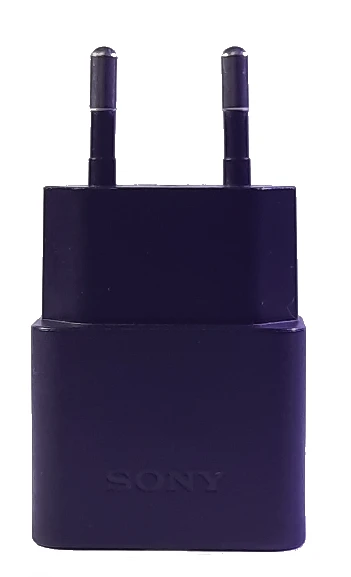
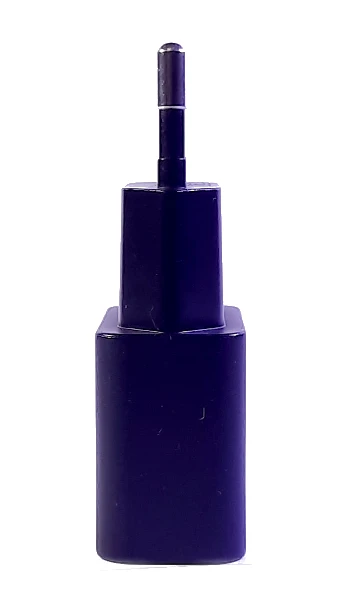
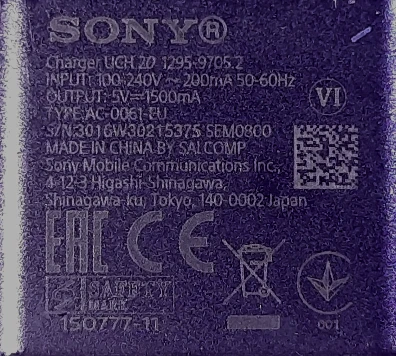
| Model | Sony UCH20 |
|---|---|
| Sign out | 5 V / 1.5 A / 7.5 W |
| Fast charging | Not present |
| Charger output | USB Type-A |
| Phone connector | Micro-B (original cable unavailable) |
| Manufacturer | SALCOMP |
AC input stage, EMI filter, bridge rectifier and PCB
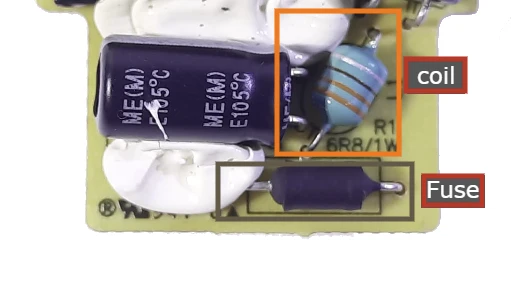
Opening the housing reveals a dense arrangement with plenty of adhesive securing the components. The first input component is a 1 W fusible resistor wrapped in black insulation for safety. The EMI filter also contains a 6.8 µH choke.
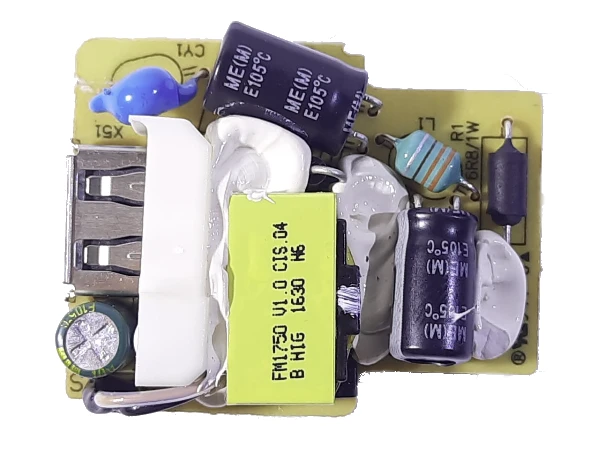
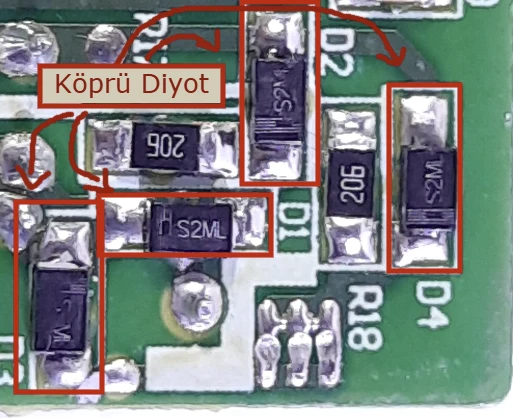
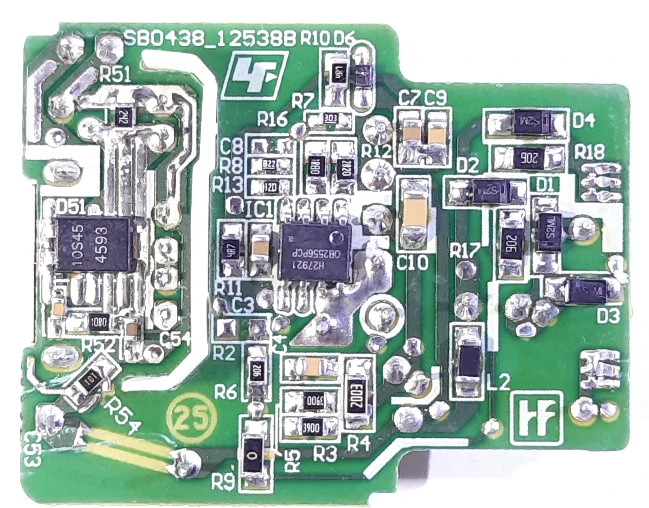
Bridge rectification uses four discrete diodes instead of a single package: S2ML rectifier diodes. Each diode is rated at 2 A / 1000 V, more than enough for a 7.5 W charger. Solder joints on the reverse of the PCB are clean and shiny, with little flux residue.
Primary circuit: bulk capacitors and controller
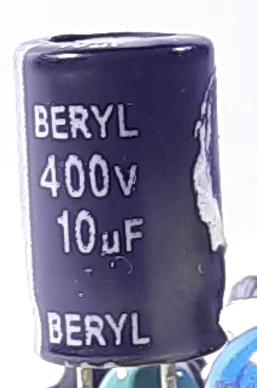
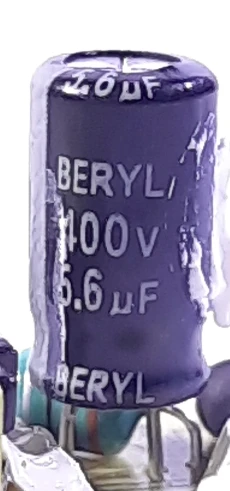
The primary side uses two Beryl ME electrolytic capacitors rated at 400 V / 15 µF and 400 V / 5.6 µF. Both are specified for 105°C and 2,000 hours. Their combined capacitance is 20.6 µF, sufficient for a 7.5 W output.
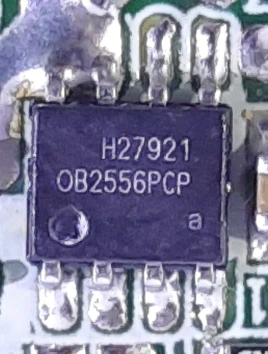
Main controller On-Bright OB2556PCP. The integrated switching element is rated for roughly 12 W, adequate for this charger. The controller includes OVP, OTP and OCP. After a short circuit or overload, the adapter latches off and does not restart until it is unplugged and reconnected.
Main transformer and isolation
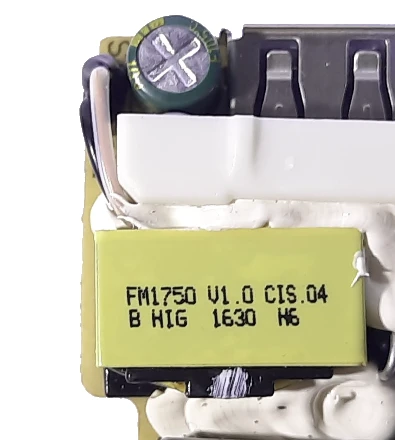
The main transformer carries the markings FM1750 V1.0 CIS.04 / B HUG 1630 H6. The fine wire around it is probably for electromagnetic shielding. The secondary windings have extra insulation and are clearly separated from the primary.
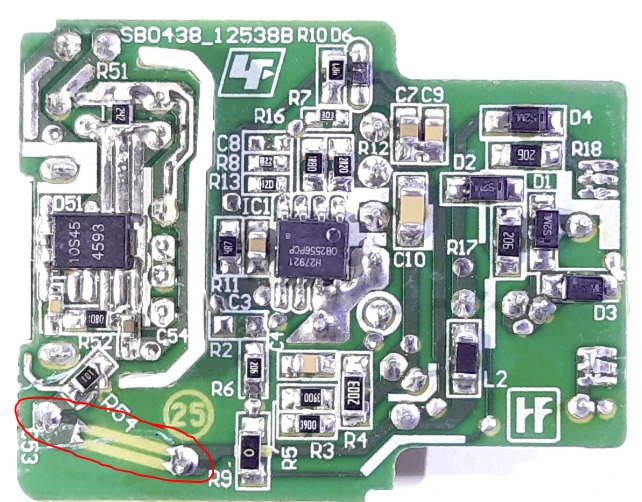
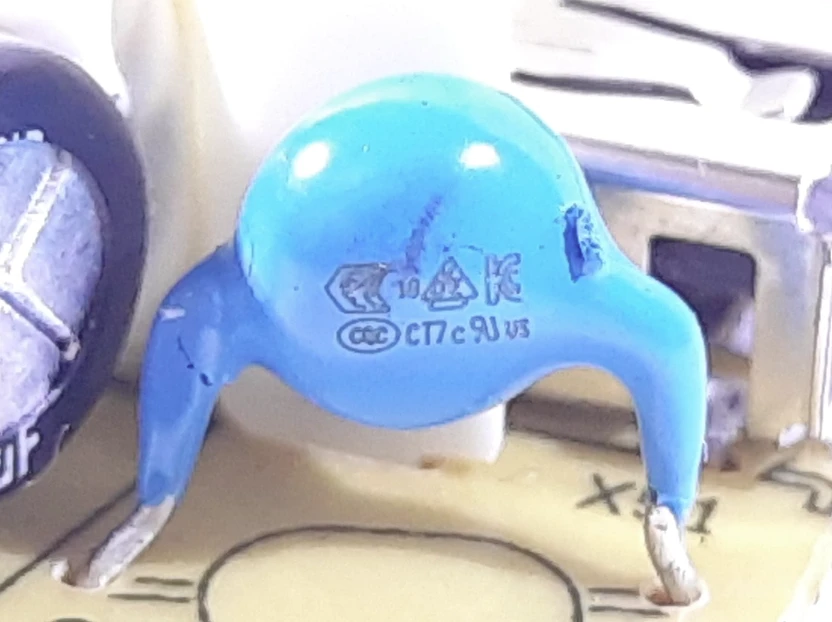
The shortest primary-to-secondary clearance is about 9 mm. A slot in the PCB helps reduce the risk of arcing. The STE / Songtian CD221K safety capacitor between these sections is 220 pF with ±10% tolerance and Y1/X1 classification.
Rectification type and output filtering
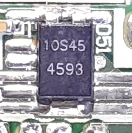
Secondary rectification is passive. The diode is 10S45, rated for 10 A / 45 V. At such low power, the lack of synchronous rectification is unsurprising. The 10 A diode is sufficient for this load and has no separate heatsink.
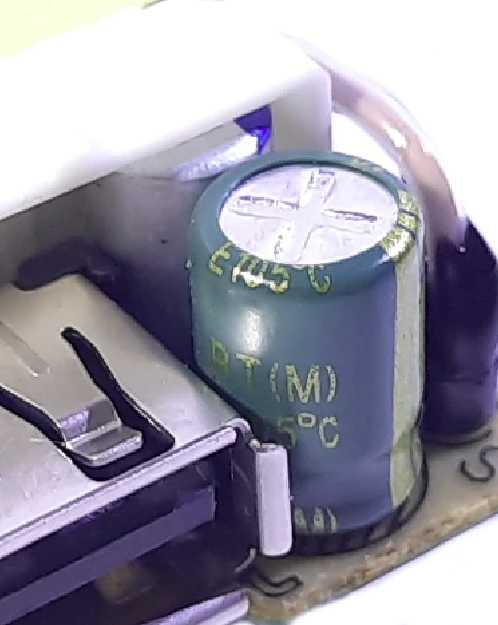
Filtrelemede Beryl RT 10V 330µF 105°C electrolytic capacitor and an unidentified 7.5 V / 500 µF polymer capacitor. Beryl's RT series is rated for 6,000–8,000 hours, a welcome specification in a charger of this age. The sample's electrolytic capacitor is still physically intact.
Regulation and ripple tests
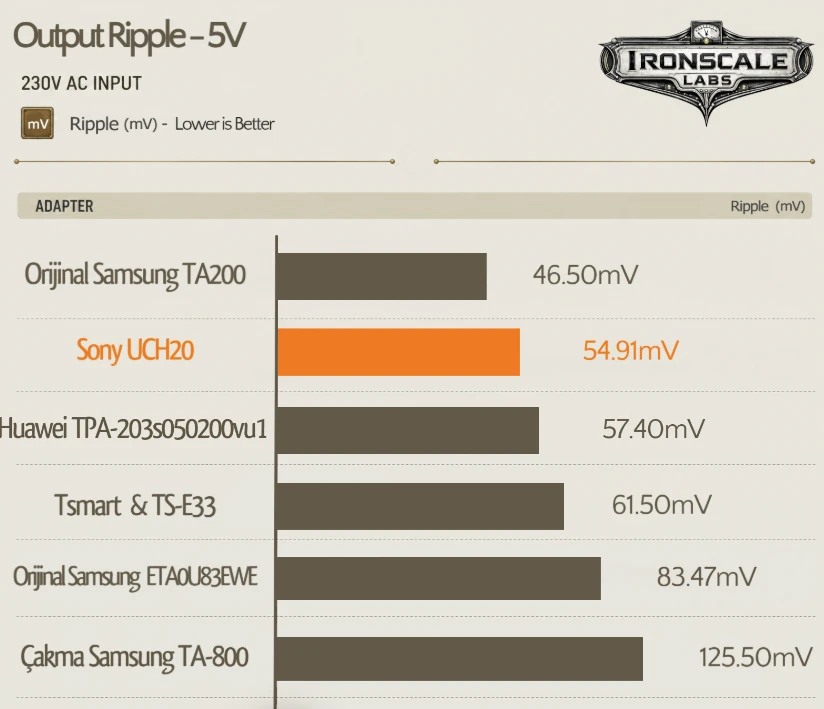
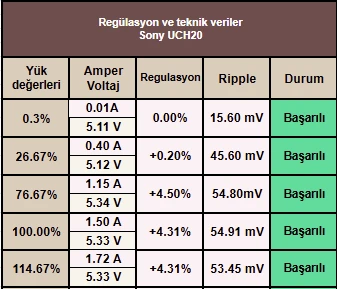
Ripple is one of the charger's strengths. The highest reading at full load was 54.91 mV, suggesting the output filtering is doing its job at this power level.
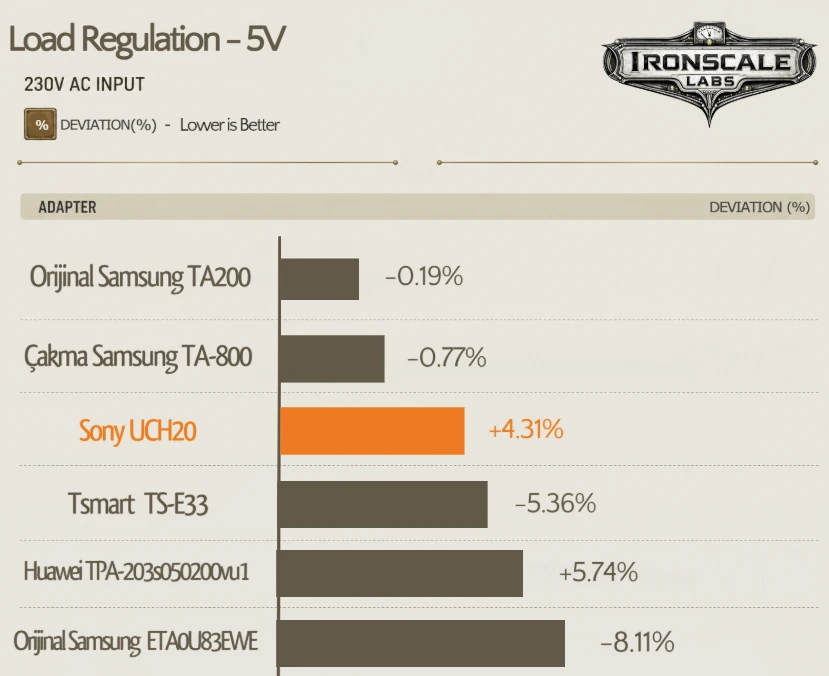
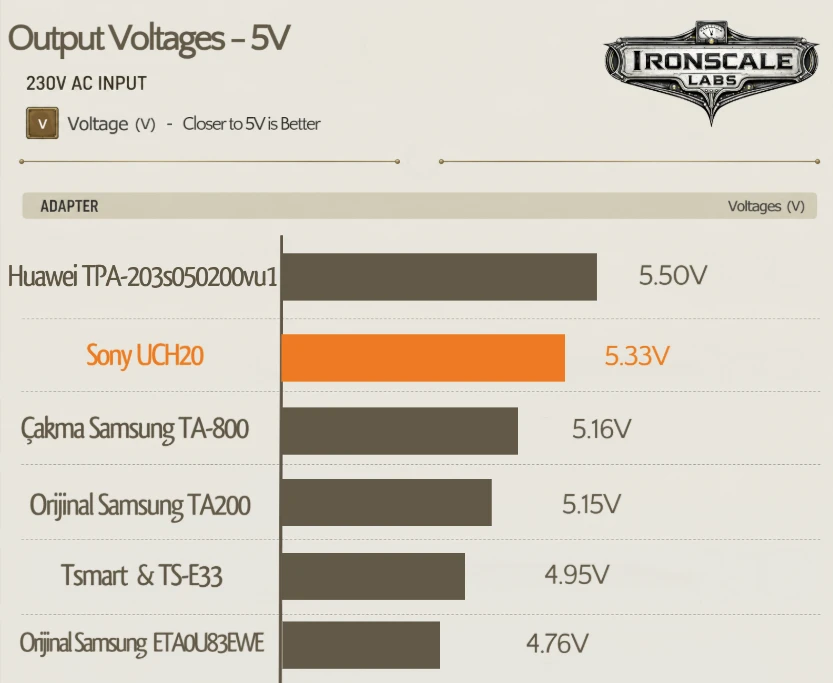
Regulation is less impressive. The output rises to 5.33 V at full load, about +4.31% relative to the measured 5.11 V starting point. The controller increases the voltage more than necessary as load rises.
Conclusion
Despite its age, the Sony UCH20 has a carefully built internal design. Isolation clearances, PCB workmanship, the Y1 safety capacitor and output filtering are all positives. Choosing 105°C-class Beryl capacitors is another welcome detail.
Ripple is respectable at 54.91 mV under full load. The main weakness is regulation, with the output reaching 5.33 V. Its lack of fast charging is understandable given when the product was released.
Pros
- Very good isolation clearances
- EMI filter is present
- Y1 safety capacitor included
- Clean PCB workmanship
- Acceptable ripple readings
- Controller supports OVP, OCP and OTP
- Proper output filtering
Cons
- Weak regulation performance
- Output rises to 5.33 V at full load
- No synchronous rectification
- No fast-charging support