
Sign in
Hello everyone. Today we'll examine the construction, components, electrical performance and noise levels of the Green GP550A ECO, a PSU with almost no published testing available worldwide. I bought this unit for just 1,399 TL with a coupon. At this price point, products from brands such as PowerBoost, Rampage, Havit and GameBooster are common, so this price looks very appealing. And rightly so.
First we'll cover the exterior, packaging and cables. Then I'll open the unit and inspect its components. Finally, we'll look at voltage regulation, ripple, temperatures, noise and protection tests. Those results are what I'm most curious about.
Exterior design, package contents and cables
Box and packaging
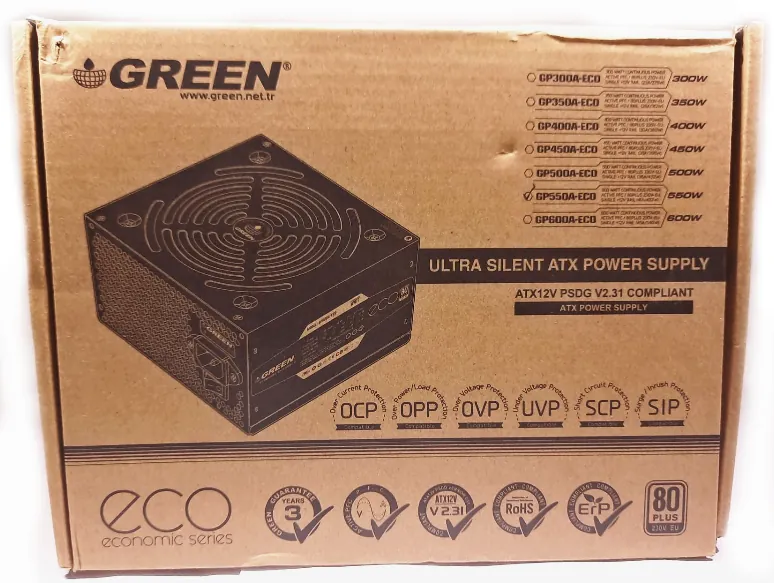
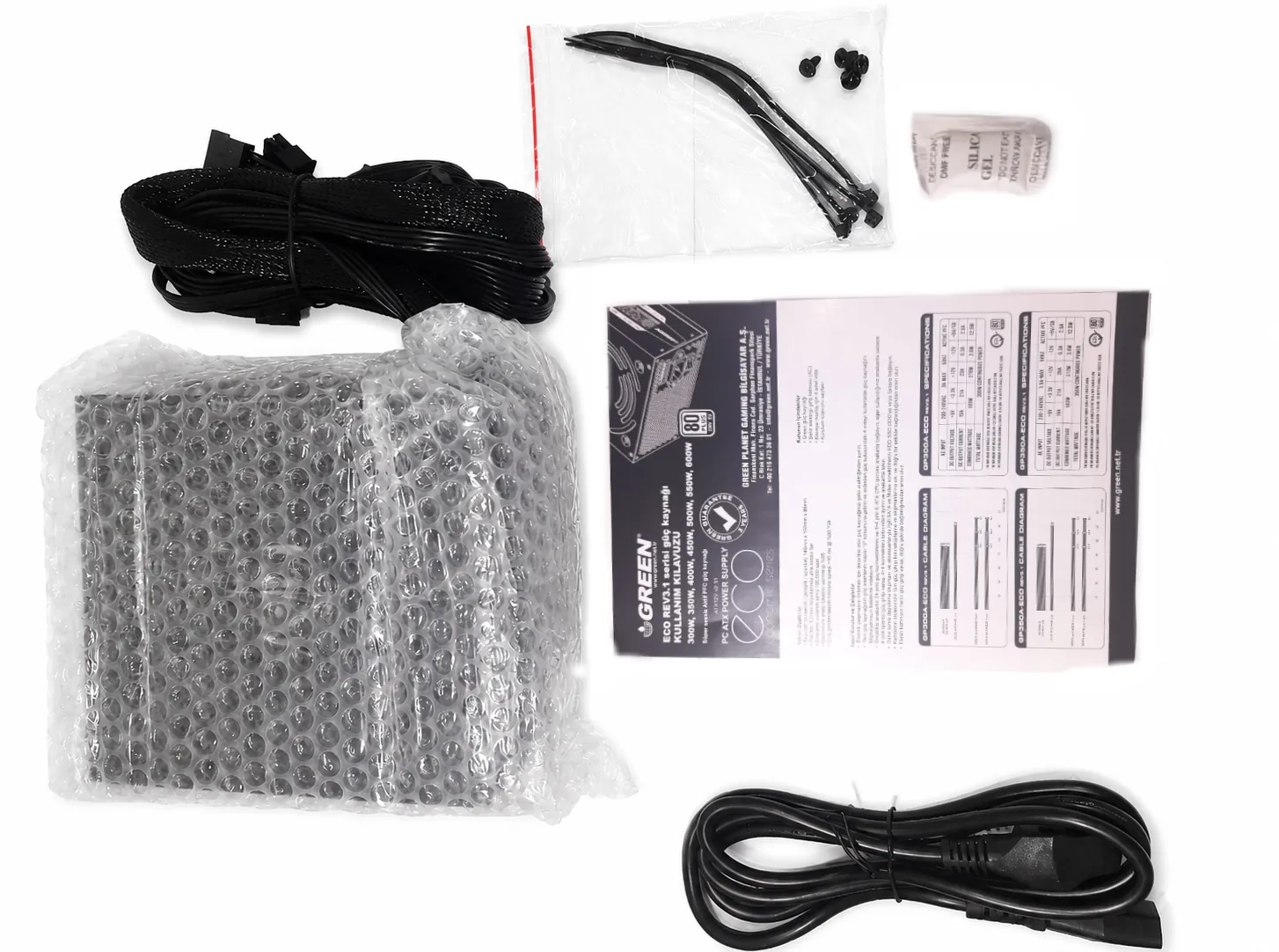
The box contents are fairly sparse: four short plastic cable ties, four screws, a power cable, a manual written entirely in Turkish, a silica-gel packet to absorb moisture, and the PSU itself. Nothing else. I liked that the PSU was wrapped in foam. The exclusively Turkish text on the box and in the manual is a little unusual; clearly they put effort into the Turkish market.
Exterior casing and label
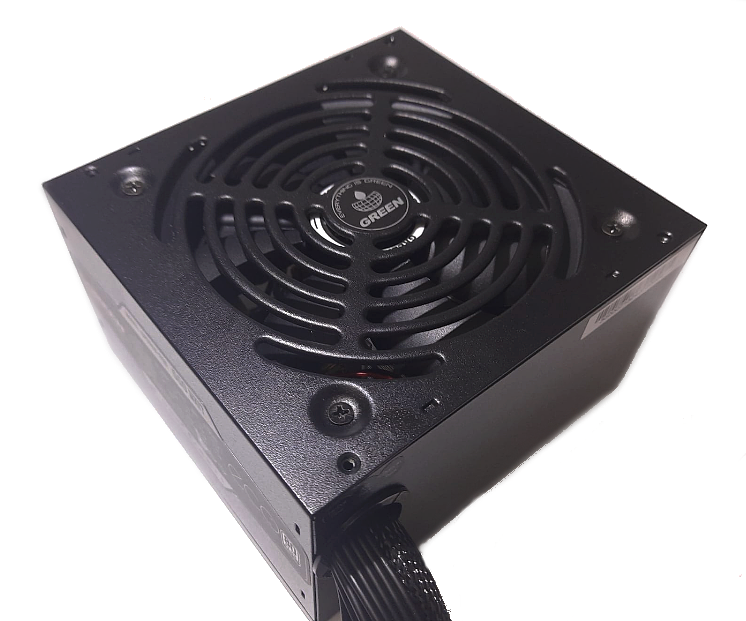
The enclosure looks like a fairly ordinary PSU. According to the label, the +5 V rail can provide 20 A, the +3.3 V rail 24 A and the +12 V rail 41 A. That works out to 492 W on +12 V. On paper, these are fairly good figures for a group-regulated PSU. What it actually does in testing is another matter.

Cable layout, lengths and wire gauge
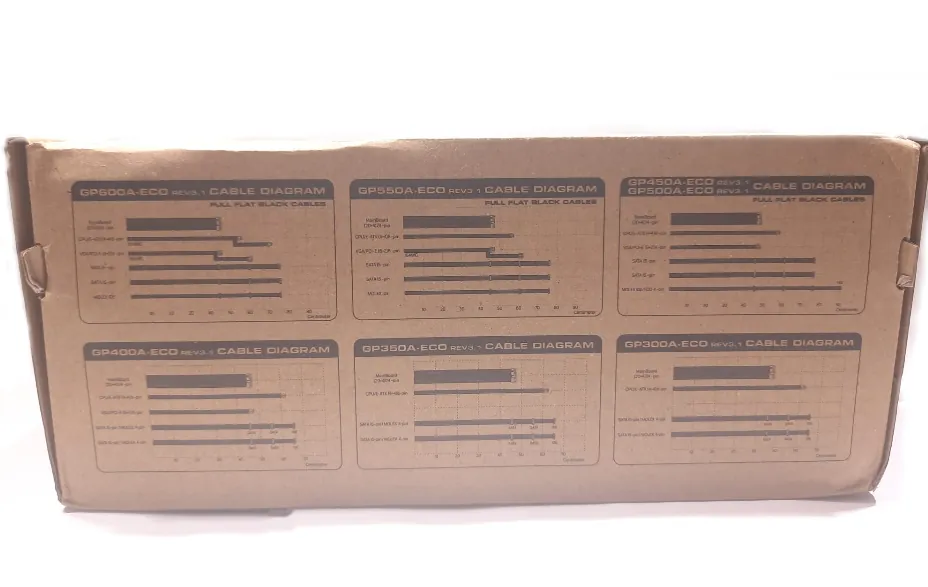
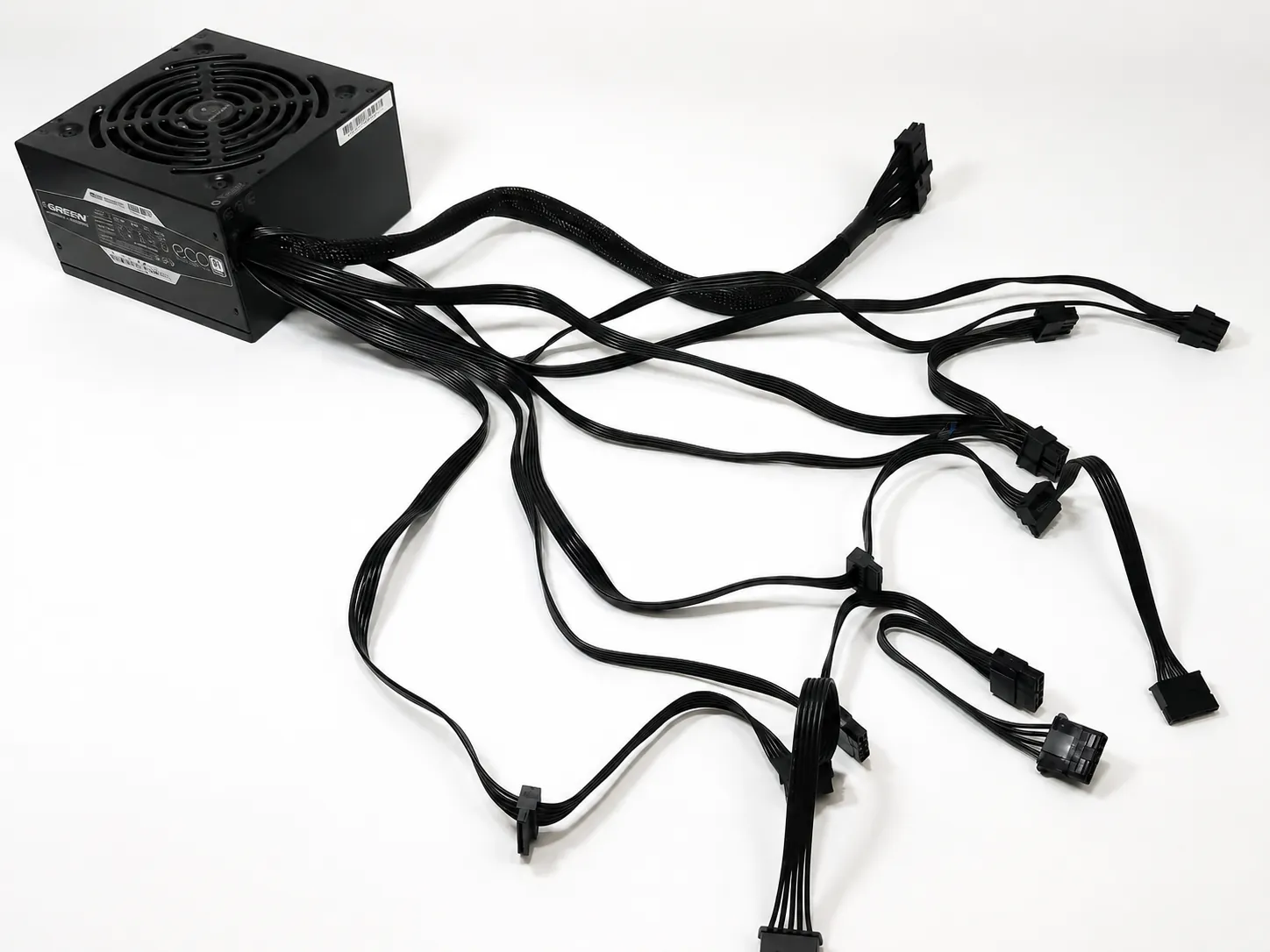
The 24-pin motherboard cable is sleeved. The other cables are flat ribbon-style cables. Colored wires are common at this price, so this is nice to see.
I was surprised to see 16 AWG conductors in the PCIe cable. Even substantially more expensive power supplies do not always use 16 AWG. Under otherwise equal conditions, thicker conductors mean lower resistance and less voltage drop. However, we cannot conclude that the cable can definitely carry 200–250 W from this alone. The connectors, contacts, wiring arrangement and temperature also matter. What I regard as positive here is the wire gauge, not a power capacity that I have not measured.
As for the drawbacks, most of the cables are very short, particularly the 24-pin. Many PSUs use a cable of around 60 cm. I would have preferred slightly longer cables over the 16 AWG PCIe cable. This could cause problems in larger cases.
Fan design and noise character
The fan is a Green Planet GF12025-SPY, rated at 12 V and 0.18 A, made by Poweryear. Frankly, it is quite poor. Even at low speed, it makes a sound as if something is rubbing. There may be an issue with lubrication or the bearing. It is probably a sleeve-bearing fan, but I could not confirm this without opening it. I tried, then stopped because I did not want to break it and had no suitable replacement.
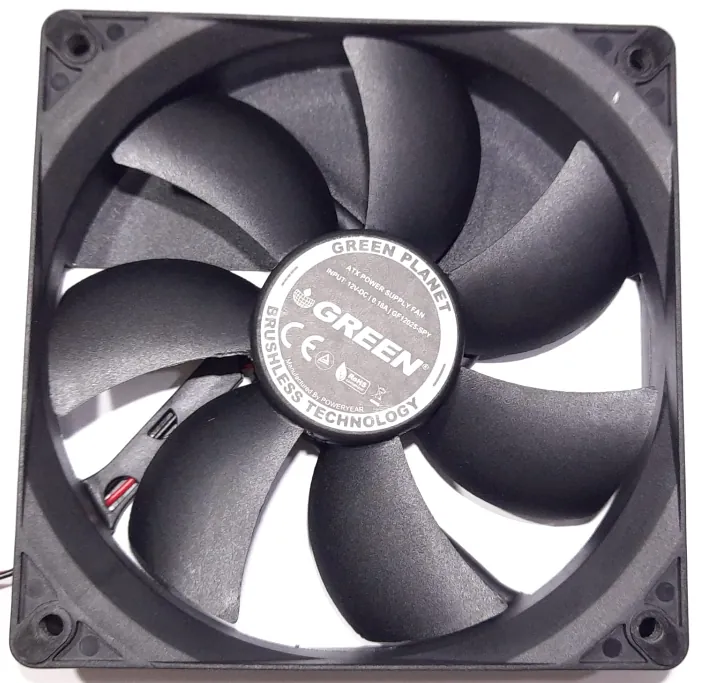
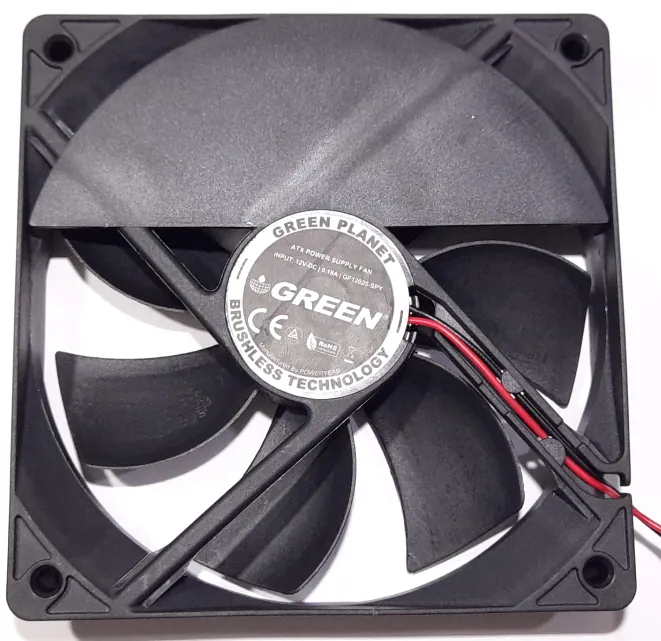
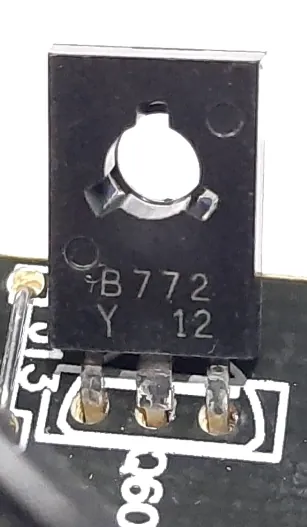
A B772 PNP transistor drives the fan. I measured its startup voltage at approximately 3 V. Poweryear fans also appear in other PSUs. I'll return to the approximately 47 dB reading at full load, but my main complaint is the rubbing sound that remains audible even at idle.
Internal design and platform
Looking at the internals, you can see how closely they resemble the Zalman TXII. Otherwise, nothing immediately stands out. Let's examine the components.
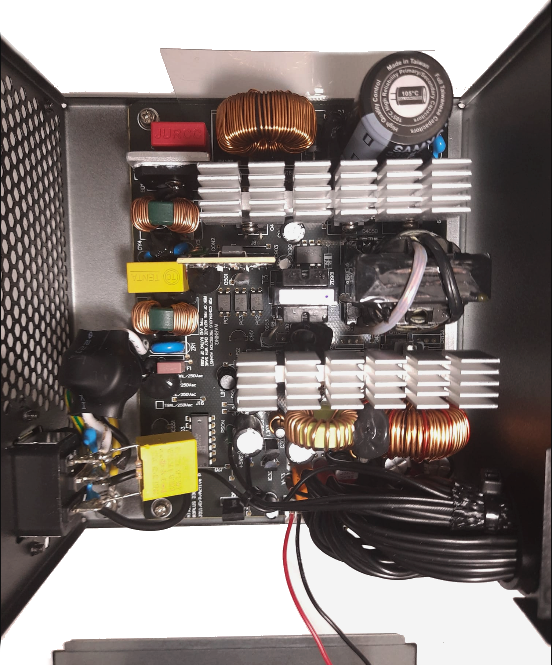
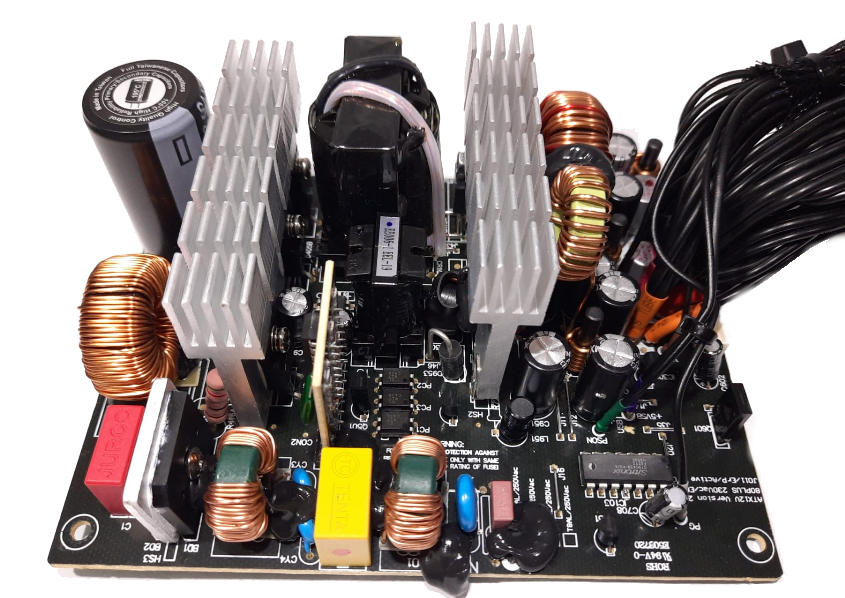
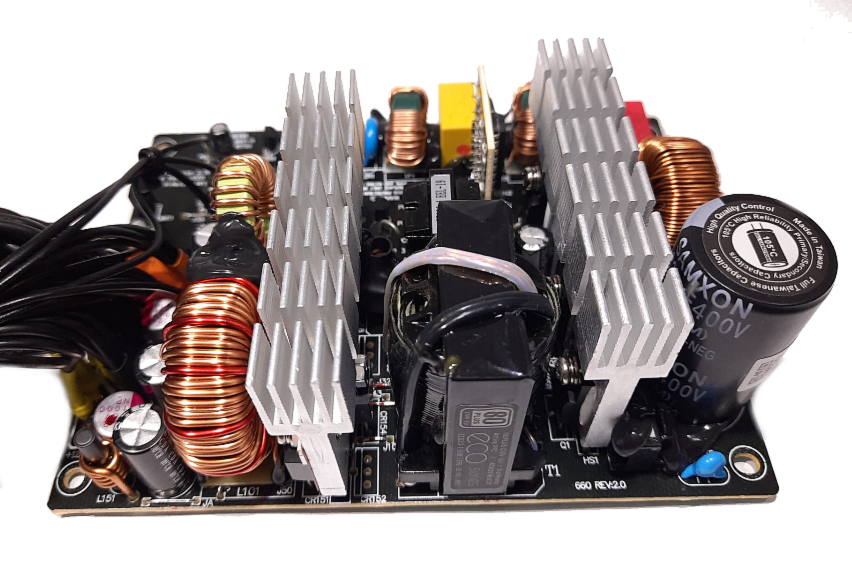
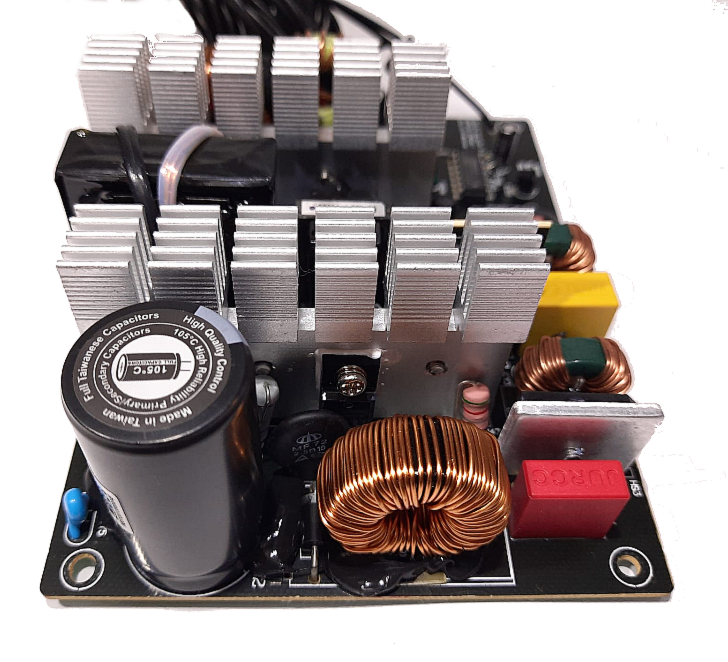
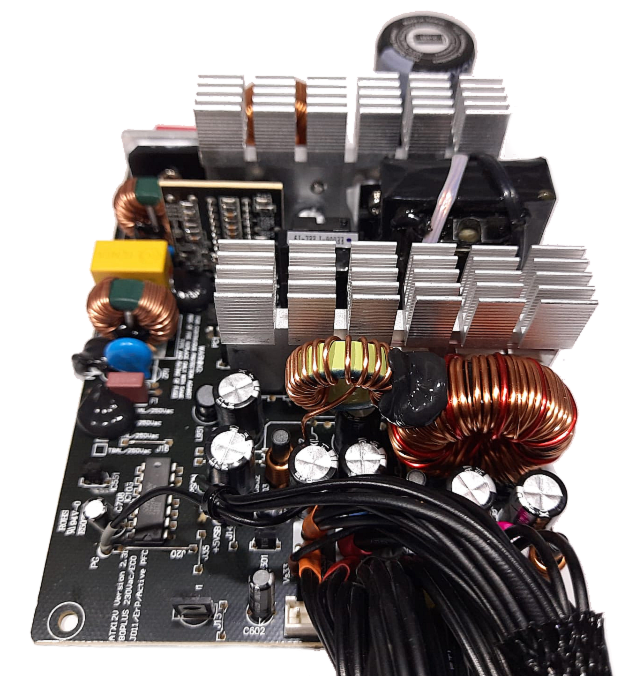
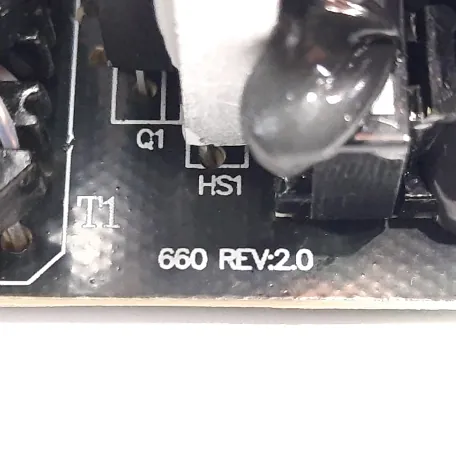
The PCB carries the marking 660. This points toward Yijian, also known under the manufacturer name Jiumeng. It appears to use the JM660 platform. The layout is also quite similar to JM650, although similarity alone does not establish that the two platforms are identical.
AC Input Stage and EMI Filter
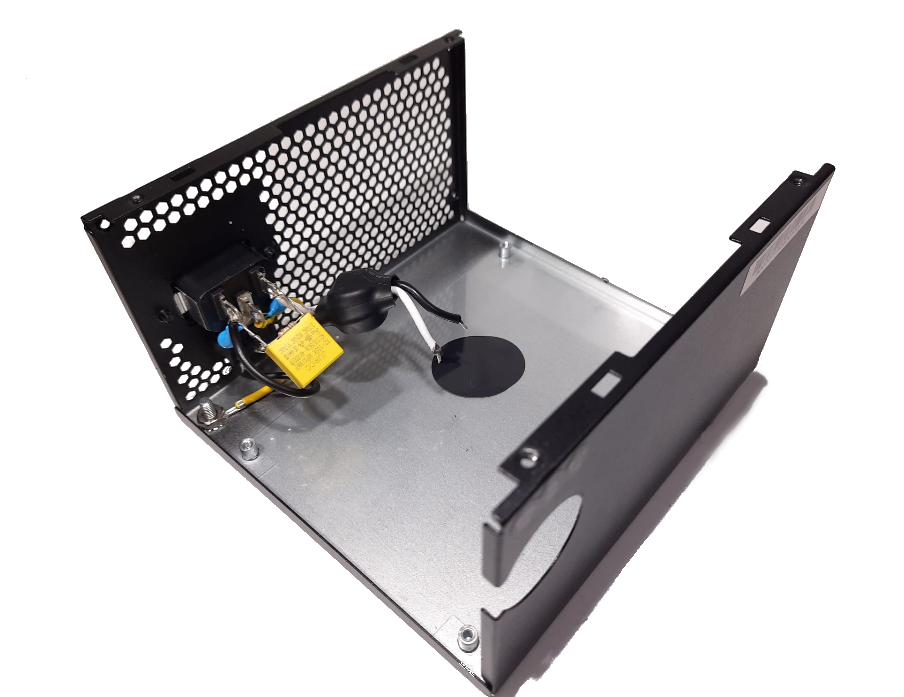
The EMI filter has two sections. The AC inlet includes two Y capacitors and one X capacitor. On the PCB, there is a fuse, MOV, two common-mode chokes, one X capacitor and two Y capacitors. In short, I did not notice an obvious omission in the input filter. That's good at this price.
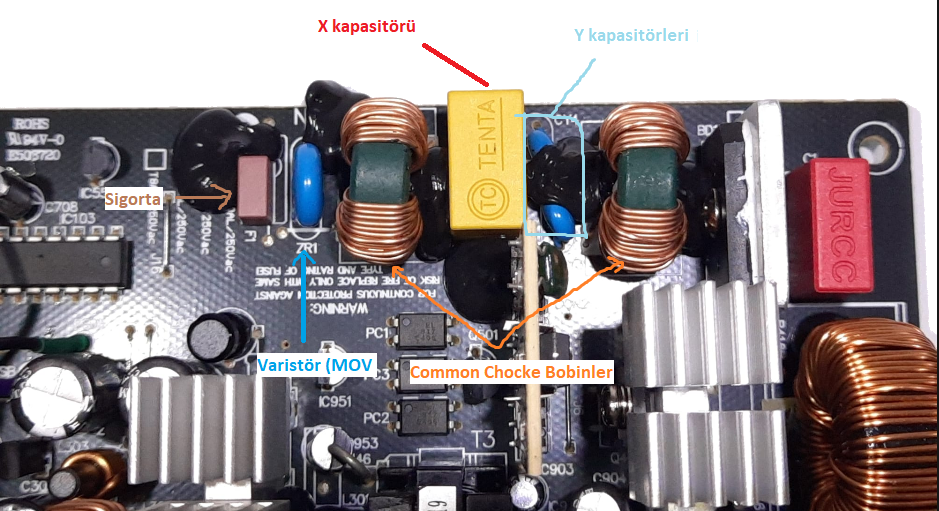
The MOV is an NDF 10DK471K. Its specified clamping voltage is around 775 V. This does not mean it conducts no current below 775 V: clamping voltage is measured at a specified surge current, and varistor conduction is gradual. A diameter of 10 mm is ordinary here.
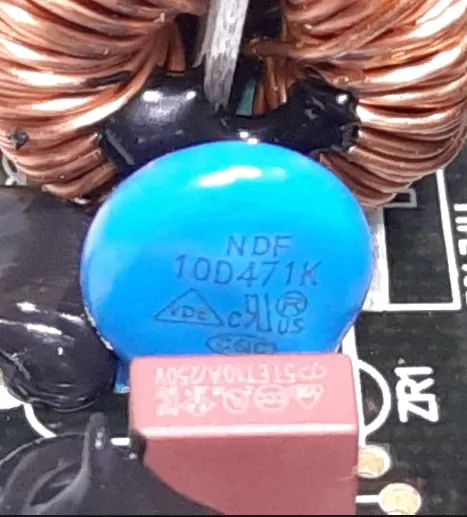
The NTC in the input stage limits the inrush current at startup. The varistor, on the other hand, suppresses transient voltage surges coming from the mains. They serve different purposes.

Primary side: bridge rectifier, APFC and PWM
Bridge rectifier
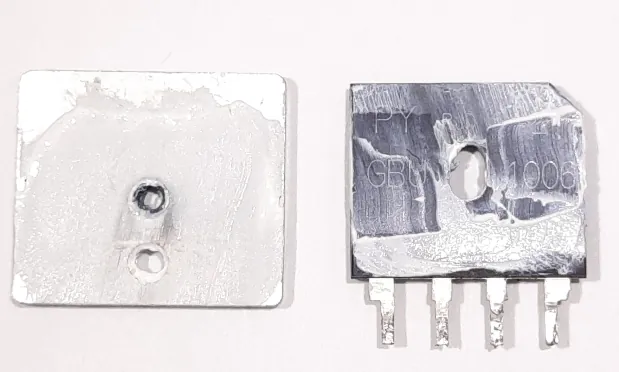
The bridge rectifier is a GBU1006 rated at 1000 V / 6 A and mounted against a heatsink. On paper, it appears sufficient for this 550 W unit. The manufacturer and part markings happened to face the wrong way, so I had to desolder the entire rectifier to identify it. Many thanks to whoever assembled it that way. 🥰
Bulk capacitor
The bulk capacitor is a SAMXON HP, rated at 330 µF / 400 V / 2,000 hours. A good choice for this unit: for instance, the MSI A550BN uses 270 µF, while this has 330 µF. The box claims 12 ms hold-up time at full load, but capacitance alone cannot verify that claim. It needs to be measured.

APFC stage
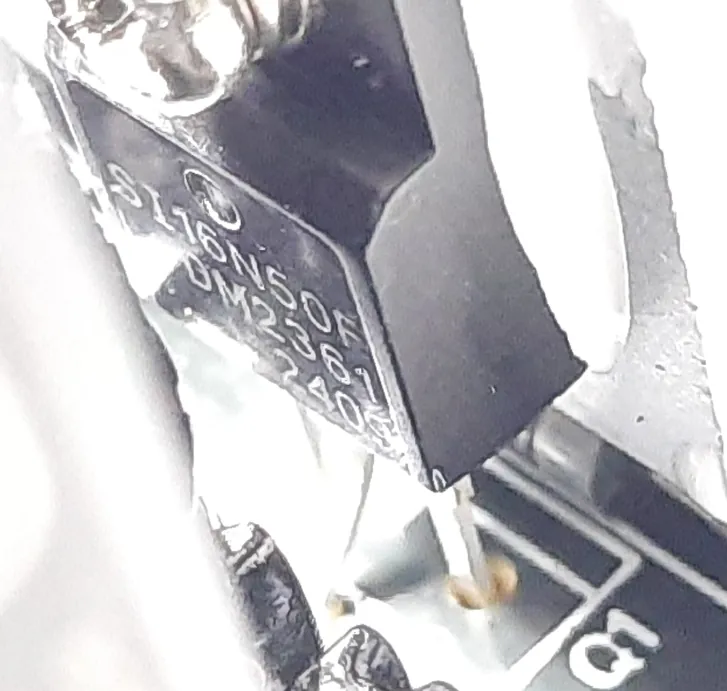
- SI16N50F
- 500 V / 16 A
- ×1
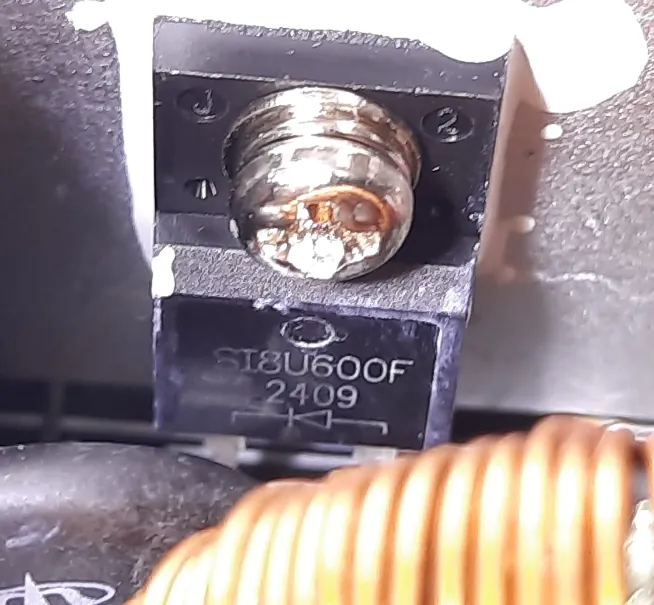
- SI8U600F
- 600 V / 8 A
- ×1
The APFC stage uses one SI16N50F MOSFET (500 V, 16 A) and one SI8U600F boost diode (600 V, 8 A). Neither has a clearly identifiable manufacturer logo, so I cannot be certain of their brands.


Main switching and controller
- SI16N50F
- 500 V / 16 A
- ×2
- Double-forward topology
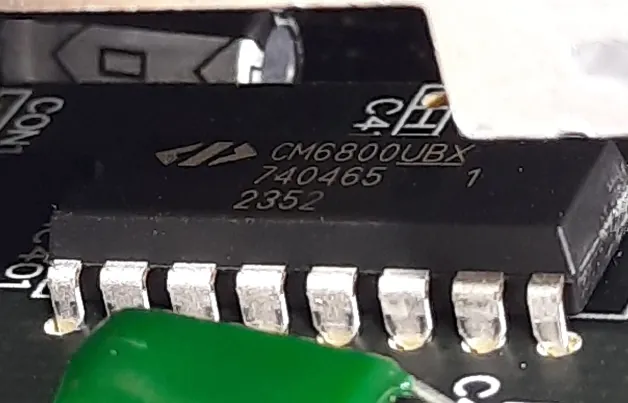
- Champion CM6800UBX
- One controller for both PFC and PWM
The main switching stage uses another two SI16N50F devices (500 V, 16 A). The unit uses a double-forward topology. A Champion CM6800UBX handles both APFC and PWM control, combining the two functions in one controller.
Secondary side
The secondary-side electrolytic capacitors are from the SAMXON GT series. Depending on the model, the specified endurance ranges from 4,000 to 10,000 hours at 105°C. Seeing these in a PSU at this price is a positive surprise.

- ERL35 type
- Adequate size for the 550 W class
- EL817
- Isolation for primary-to-secondary feedback
The main transformer is of the ERL35 type, and EL817 optocouplers are used. As this is a group-regulated unit, the distribution of load across the rails affects voltage behavior. The tests will demonstrate that.
5VSB rail
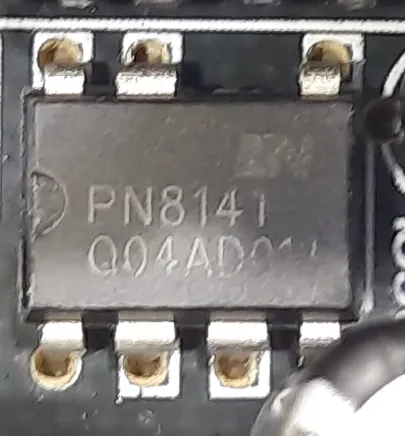
A PN8141 controls the 5VSB rail and includes an integrated switching device. A 25 W-related specification in the IC datasheet does not mean that this PSU can necessarily supply 25 W directly from its 5VSB output. The output uses an SR560 Schottky diode rated at 6 A / 60 V. The PN8141's own circuit also specifies OVP, OCP and OTP features.


- SAMXON GT 105°C 2200 µF — 4,000–10,000 hours ×1
- Small rod-core inductor ×1
- SAMXON GT 105°C 1500 µF — 4,000–10,000 hours ×1
- At idle: 5.18 V / 11.00 mV
- At 60% load: 5.12 V / 14.00 mV
- At 88% load: 5.02 V / 13.78 mV
- At 96% load: 4.96 V / 14.50 mV
The output filter contains 2200 µF and 1500 µF SAMXON GT capacitors, with a rod inductor between them. This is a sensible arrangement. Although 5VSB voltage regulation is not outstanding, the measured points remained within ATX limits. Ripple was not an issue.
5VSB — Voltage, Regulation and Ripple Measurements
| Load | Voltage | Regulation* | Ripple | Result |
|---|---|---|---|---|
| 0% | 5.18 V | 0.00% | 11.00 mV | Passed |
| 60% | 5.12 V | −1.16% | 14.00 mV | Passed |
| 88% | 5.02 V | −3.09% | 13.78 mV | Passed |
| 96% | 4.96 V | −4.25% | 14.50 mV | Passed |
These percentages are calculated relative to the starting value of 5.18 V. At the points I measured, neither voltage nor ripple exceeded the ATX limits.
Rectification and output filtering
Output rectification uses diodes, so there is no synchronous rectification. Regulation is group-regulated, and the +3.3 V rail is adjusted by a saturable inductor on the secondary side. In short, this is a familiar group-regulated design.
+12 V rail
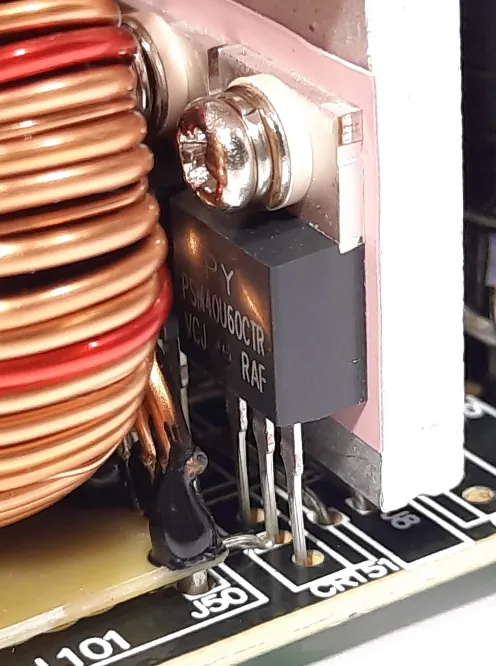
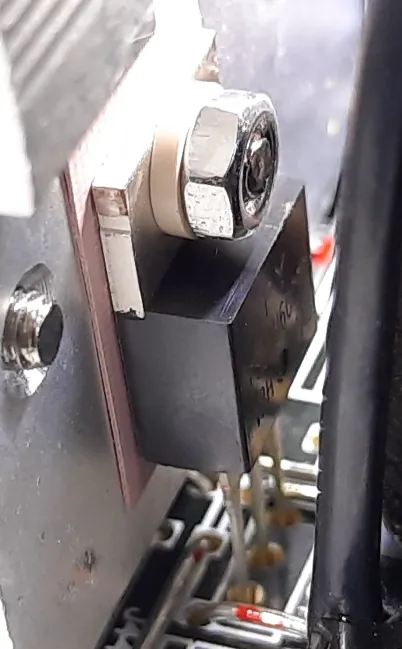
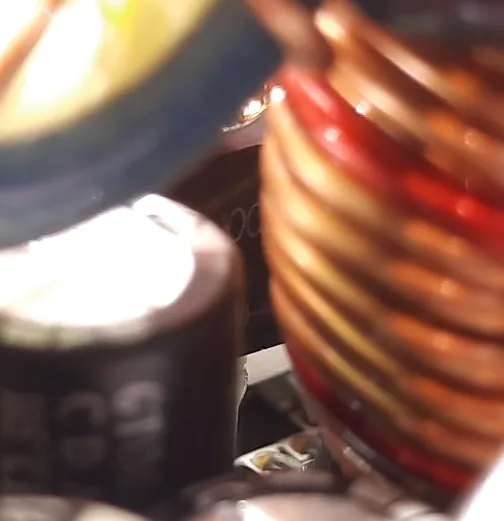
The 12 V rail has two PS30U60CTR devices (30 A, 60 V) and one PS40U60CTR (40 A, 60 V). I could not establish which manufacturer uses the PY marking on them. We could call them unbranded. Nor would it be correct to add up their ratings and claim the rail can deliver 100 A; cooling, current sharing and real operating conditions also matter.
+5V and +3.3V
The +5 V rail uses an SI30L100CT Schottky diode rated at 30 A / 100 V. I did not see a manufacturer logo. The label specifies 20 A on 5 V; the component's nominal rating exceeds that, but its actual limit also depends on cooling.
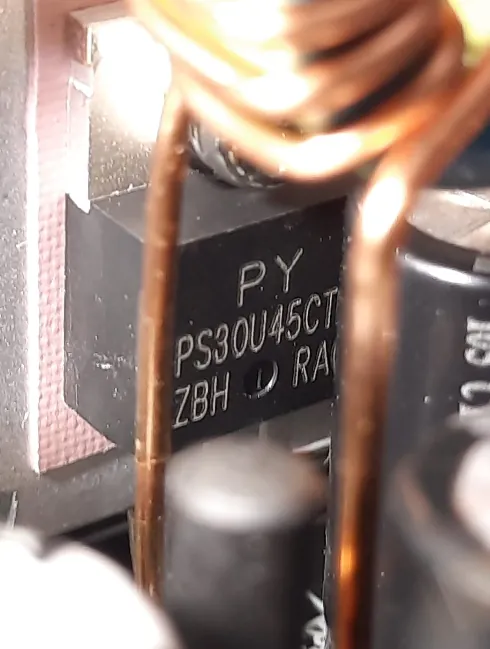
The +3.3 V rail uses a PS30U45CTR (30 A, 45 V). Again, the manufacturer is uncertain. The label claims 24 A. This seems consistent with the nominal component rating, but a diode's printed rating alone cannot establish actual performance.
I could not identify the component supplying and rectifying the −12 V rail. There must be a circuit for it, but I could not locate it.
Filtering
Below I've listed the capacitors and inductors used for filtering on the respective rails.
- SAMXON GT 105°C 2200 µF — 4,000–10,000 hours ×1
- Rod-core inductor ×1
- X-CON ULR 105°C 1000 µF — 2,000 hours ×1
- SAMXON GT 105°C 2200 µF — 4,000–10,000 hours ×1
- Rod-core inductor ×1
- X-CON ULR 105°C 470 µF — 2,000 hours ×1
- SAMXON GT 105°C 2200 µF — 4,000–10,000 hours ×1
- Rod-core inductor ×1
- SAMXON GT 105°C 1500 µF — 4,000–10,000 hours ×1
- SAMXON GT 105°C 2200 µF ×1
Overall, filtering looks quite good. I would still have liked a little more capacitance on the +5 V rail. That might affect transient response, but capacitance alone is not enough to draw a firm conclusion. ESR, inductors and the regulation circuit also matter.

Performance tests
Now for the most important part of the review. I tested the PSU both in a real PC and with light bulbs and additional resistors. For each load level, I recorded the lowest voltage observed. The ambient temperature was about 27°C.
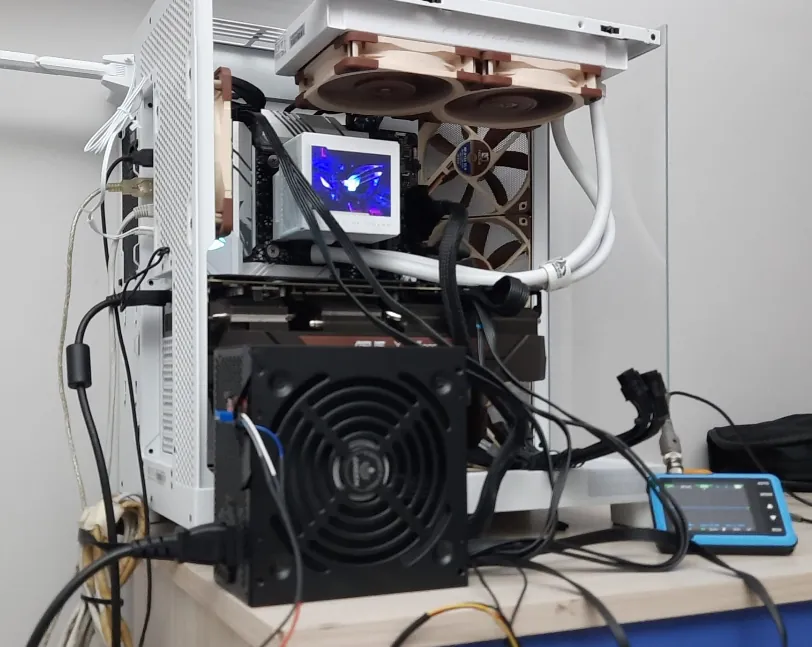
Voltage and regulation
Green showed its first serious issue at high load. As the load increases, the 12 V rail voltage gradually falls, reaching 11.43 V at the PCIe connector. Relative to its initial reading of approximately 12.33 V, that is a −7.30% change. This is not the ATX deviation relative to nominal 12 V: 11.43 V is about 4.75% below nominal, very close to the 11.40 V lower limit. The rail that actually exceeded the limit was +5 V, where I recorded 5.31 V at 83.64% load. The ATX upper limit is 5.25 V, so it fails at that point. The drop on +12 V also makes the mediocre regulation obvious.
Voltage, Fan and Temperature Table Under Load
| Load | +12 V | +5 V | +3.3 V | Fan | Exhaust | Heatsink | Conclusion |
|---|---|---|---|---|---|---|---|
| 0.00% | 12.33 V | 5.13 V | 3.36 V | 33 dB | 35°C | 35°C | Passed |
| 36.36% | 12.13 V | 5.18 V | 3.36 V | 35 dB | 45°C | 50°C | Passed |
| 54.55% | 11.76 V | 5.25 V | 3.36 V | 40 dB | 53°C | 58°C | Passed |
| 83.64% | 11.63 V | 5.31 V | 3.37 V | 45 dB | 65°C | 66°C | Failed |
| 92.73% | 11.43 V | 5.23 V | 3.24 V | 47 dB | 67°C | 70°C | Passed |
| CL125 | 12.13 V | 4.93 V | 3.20 V | 46 dB | 63°C | 65°C | Passed |
These are values from my own tests. The fan noise levels in dB are approximate measurements. I've separately flagged the +5 V rail exceeding its limit at 83.64% load. CL125 is the cross-load test.
Ripple
For ripple measurements I used a 1 µF ceramic capacitor and a 10 µF Nippon Chemi-Con electrolytic capacitor. Regulation was disappointing, but ripple was good. The highest result on +12 V was 57 mV, below the ATX limit. The capacitors appear to be doing their job.
| Load | 12 V | 5 V | 3.3 V | Result |
|---|---|---|---|---|
| 0.00% | 14.00 mV | 12.89 mV | 11.56 mV | Passed |
| 36.36% | 20.80 mV | 17.20 mV | 14.50 mV | Passed |
| 54.55% | 39.11 mV | 15.40 mV | 18.40 mV | Passed |
| 83.64% | 53.07 mV | 19.11 mV | 25.33 mV | Passed |
| 92.73% | 57.00 mV | 19.00 mV | 26.00 mV | Passed |
| CL125 | 39.00 mV | 15.11 mV | 17.20 mV | Passed |
Temperature and noise
I do not have a professional sound-level meter, so the fan noise figures should be taken as estimates. I measured around 47 dB at full load. The fan is clearly audible but not unbearably loud. What I dislike is the faint rubbing noise it makes at idle. I also used two temperature sensors: a 160K NTC removed from a Xigmatek Shogun G 750 W on the secondary heatsink, and a KY-028 module at the exhaust. The heatsink reached a maximum of 70°C. Since the ambient temperature was 27°C, we cannot assume the same result in a hotter 40°C environment.

PCB, solder quality and isolation
Solder quality is generally good. I did not notice any obvious cold joints, missing solder or solder bridges. The clearance between the primary and secondary also appears sufficient. A few extra ventilation holes below the transformer might have been helpful.
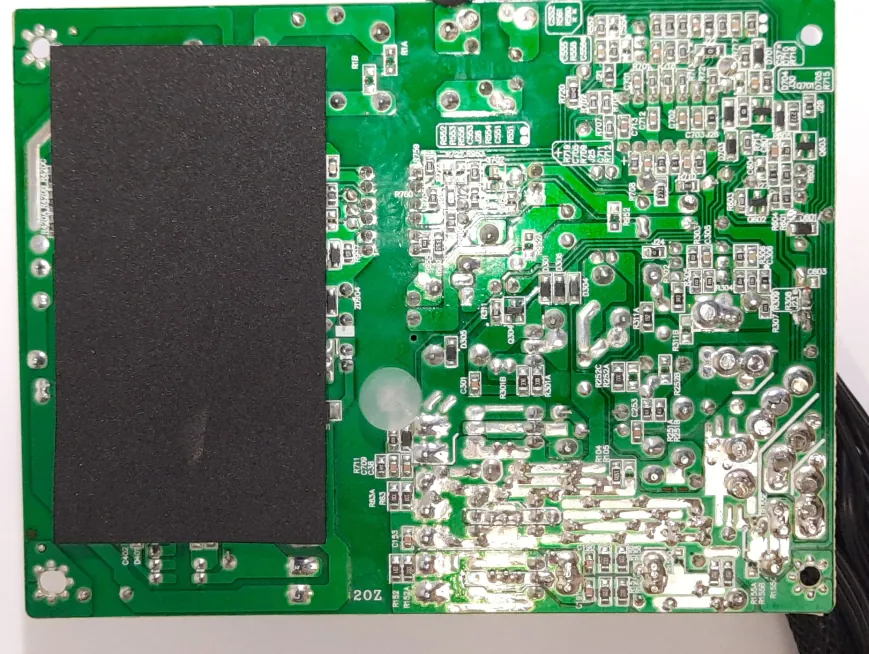

There is a little coil whine under heavy load. The parts have been coated, but that has not completely eliminated the noise. Coil whine alone does not mean the PSU is faulty; it is simply unpleasant.
Protections and Supervisor IC
The supervisor IC is a Sitronix ST9S429-PG14. This controller supports OVP, UVP, OCP and Power Good functions. However, the fact that an IC supports them does not prove that every protection is implemented on every rail of the PSU. I could not independently verify OTP either. The actual protections I tested and their results are listed below.

Conclusion
We have reached the conclusion. The Green GP550A ECO is not an outright terrible model, but its voltage regulation fell below my expectations. I did not like how much the +12 V rail sags with load, or how the +5 V rail exceeds the ATX limit at one test point. The first thing I expect from a PSU is stable voltages.
On the other hand, ripple results are quite good, temperatures stayed under control in a 27°C test environment, and most of the protections I tested worked. A complete EMI filter, APFC, SAMXON GT capacitors and 16 AWG PCIe wiring are all positives. However, the cables are short, the fan makes a rubbing sound at low load, and the manufacturers of some MOSFETs and diodes are uncertain. There is also mild coil whine under heavy load.
Of course, remember that I bought the unit for 1,399 TL. It is unrealistic to expect a flawless PSU at this price. If your budget is very tight and your system consumes around 300 W, it may be worth considering. But if a similarly priced alternative has better voltage regulation and reliable published tests, I would prioritize that instead.
Pros
- Long-life SAMXON GT capacitors for the price
- Able to deliver rated power at 27°C ambient
- 16 AWG PCIe cable
- Three-year warranty
- Good ripple results
- Positive results in protection testing
- Full EMI filter and APFC
Cons
- Weak regulation on +12V and 5VSB
- +5V exceeded ATX limits in one test
- Short cables, particularly the 24-pin
- Rubbing-like fan noise at light load
- Unidentified manufacturers for some MOSFETs and diodes
- No verified system-level OTP identified
- Light coil whine under very heavy load

Forgivable for its price
I use the 'Forgiven because of its price' badge for PSUs whose technical weaknesses would ordinarily make me hesitant to recommend them, but which have few meaningful competitors at their price. This badge does not mean the product has no problems; it simply means that some shortcomings can be accepted when its price is taken into account.